Logan Pavilion
Project Details:
Architect: CLB Architects
Location: Jackson, WY | Completed 2020
Photography: Matthew Millman
Designed and refined over more than two decades, this family home in Jackson, Wyoming, balances a restrained main residence and guesthouse with a detached garage shaped by design, use, and personal passion. Classic Porsches, motorcycles, tools, records, and instruments share the space.
A garage designed with the same intent as the house itself.

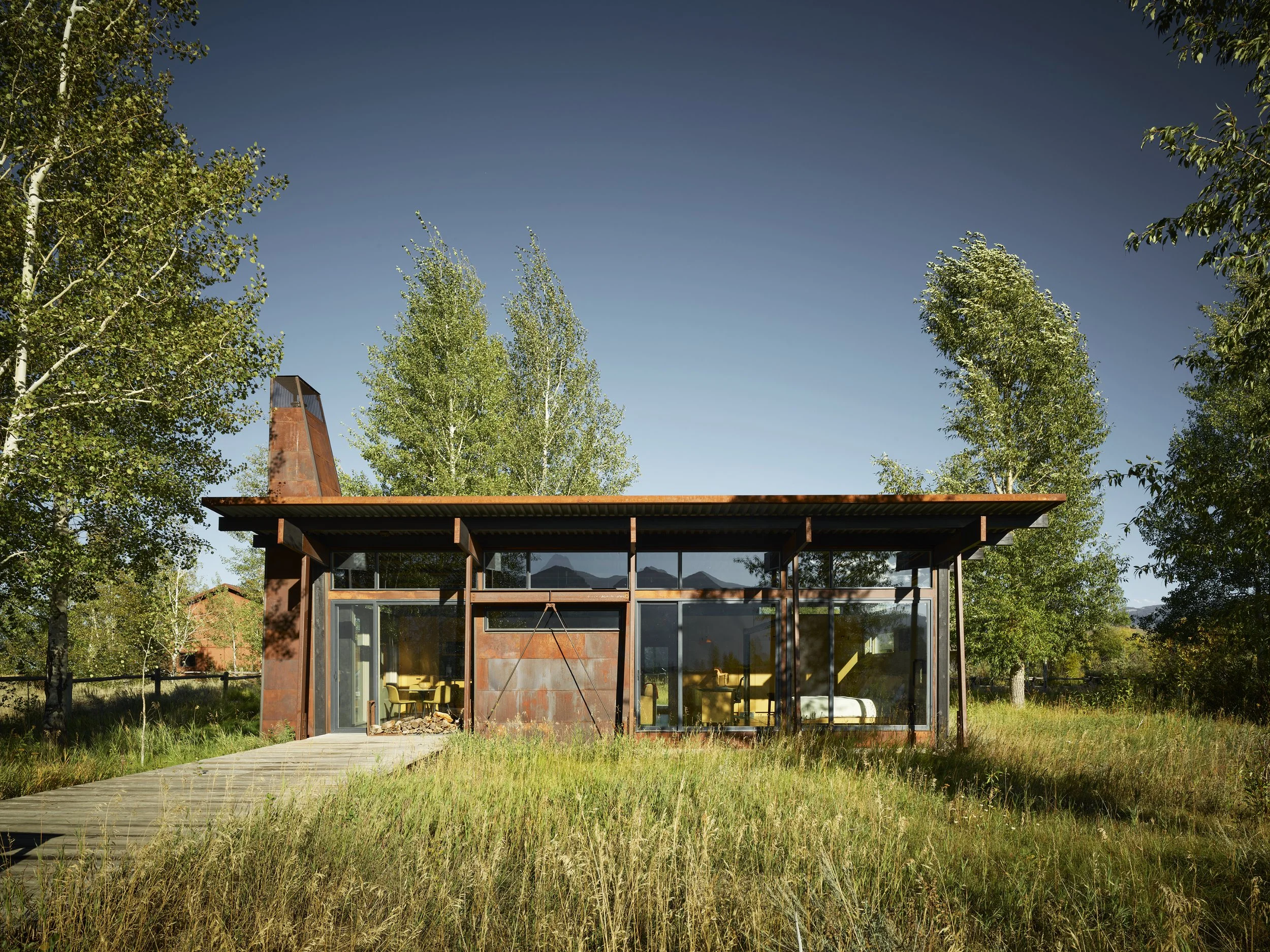
On a sagebrush plain north of Jackson, with open views toward the Teton Range, Logan Pavilion is located on a 2.44-acre site outside the town center. A series of low, weathering structures are arranged across the property, shaped by long-term use and time as much as by design intent. Rather than being placed on the land, the project has been shaped by it.
Designed and continually refined by Eric Logan, FAIA, a partner at CLB Architects, the project began in 1997 as a family home built on a compressed schedule and a tight budget. Over more than two decades, it has evolved with the Logan family, expanding and adapting to new needs while retaining the original simplicity of the design.
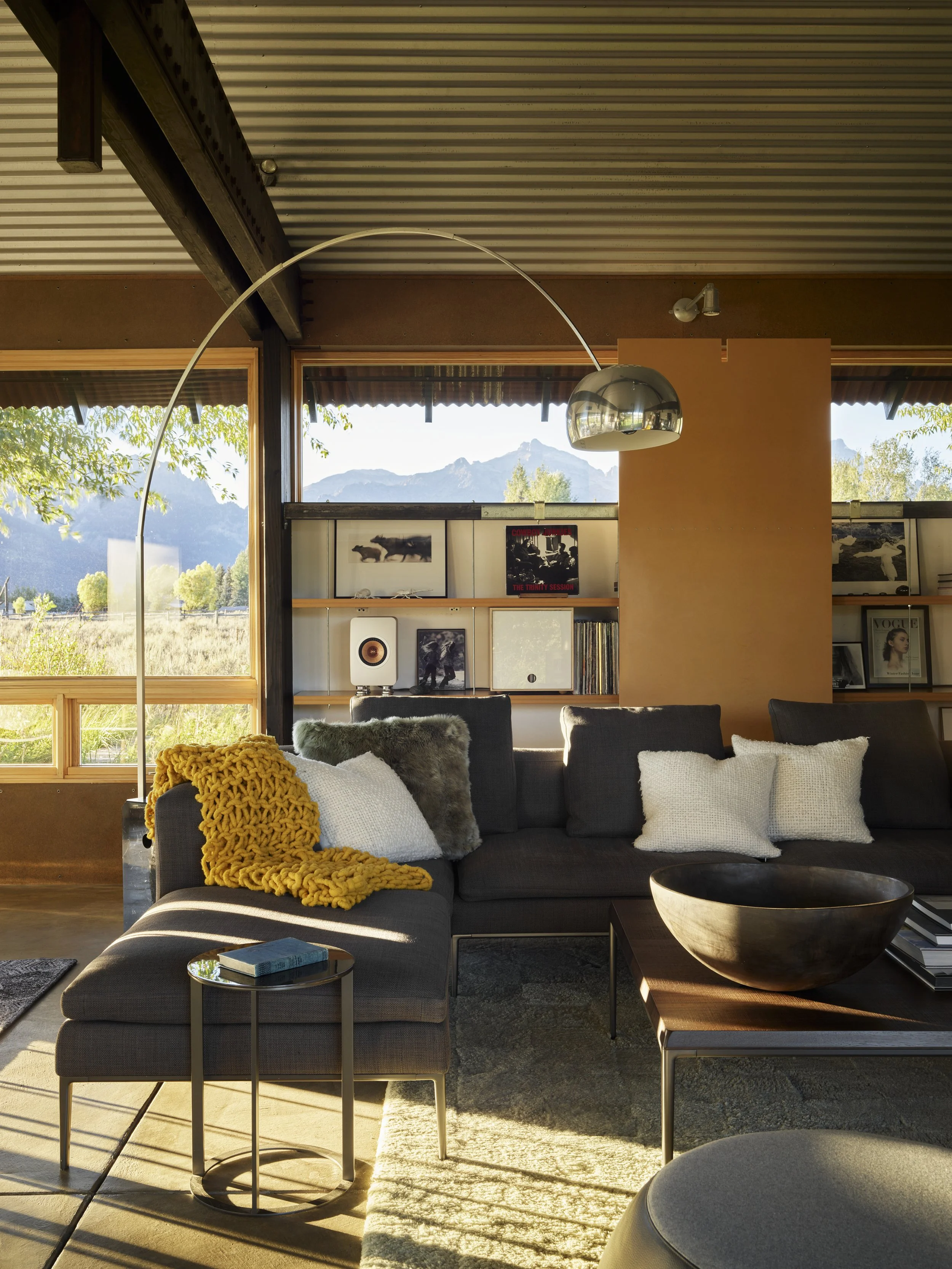
The main residence takes cues from vernacular hay sheds common to the region. A gabled roof, supported by tall columns, provides protection from Wyoming’s extreme climate while remaining visually open to the surrounding landscape. Exterior materials, including rough-sawn cedar siding, oxidized corrugated steel, and ipe decking, were selected for durability and how they age over time. Inside, finishes remain intentionally straightforward: oiled Masonite wall panels, raw MDF cabinetry, and stained concrete floors prioritize function, light, and proportion over surface refinement.
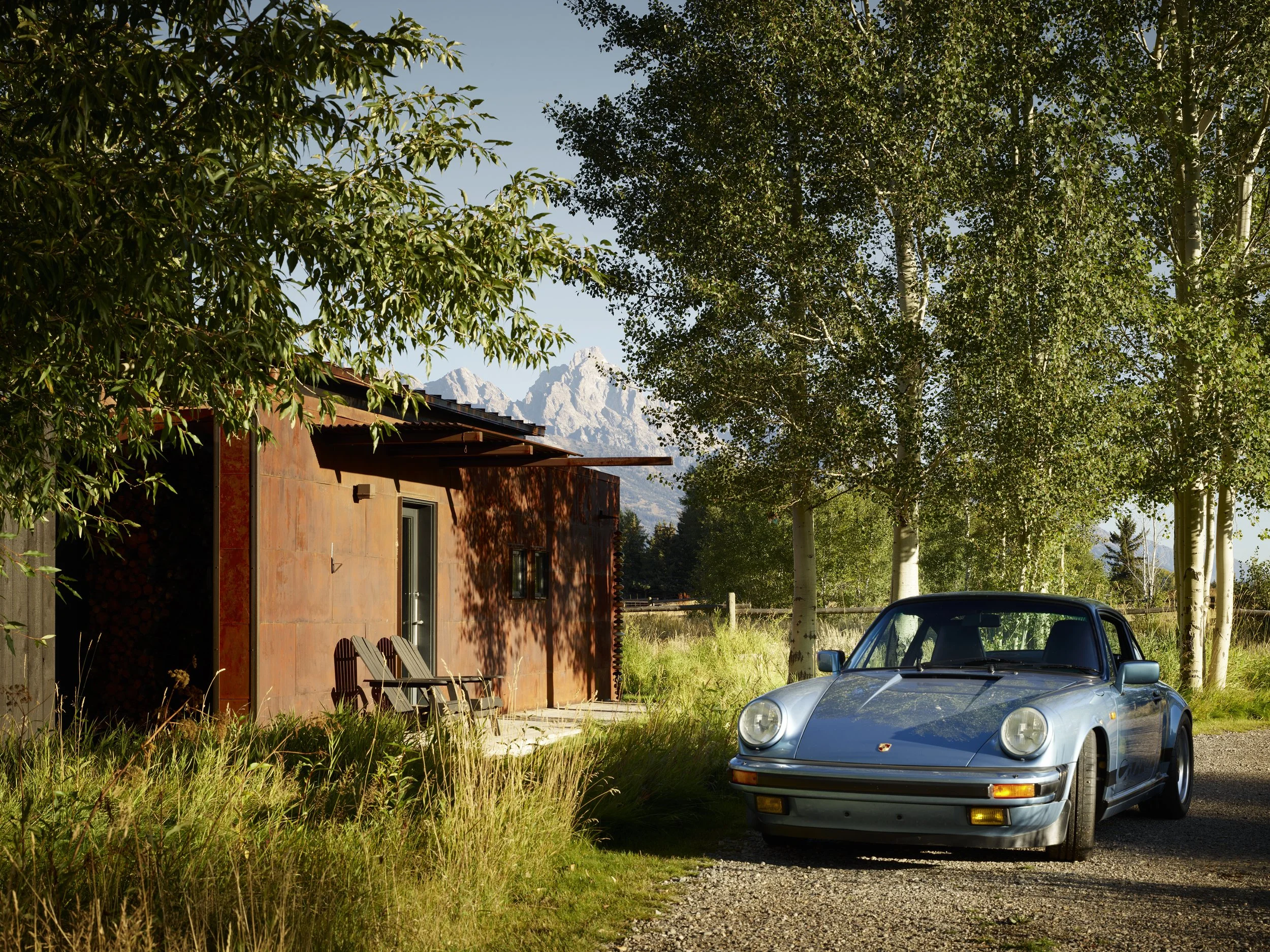
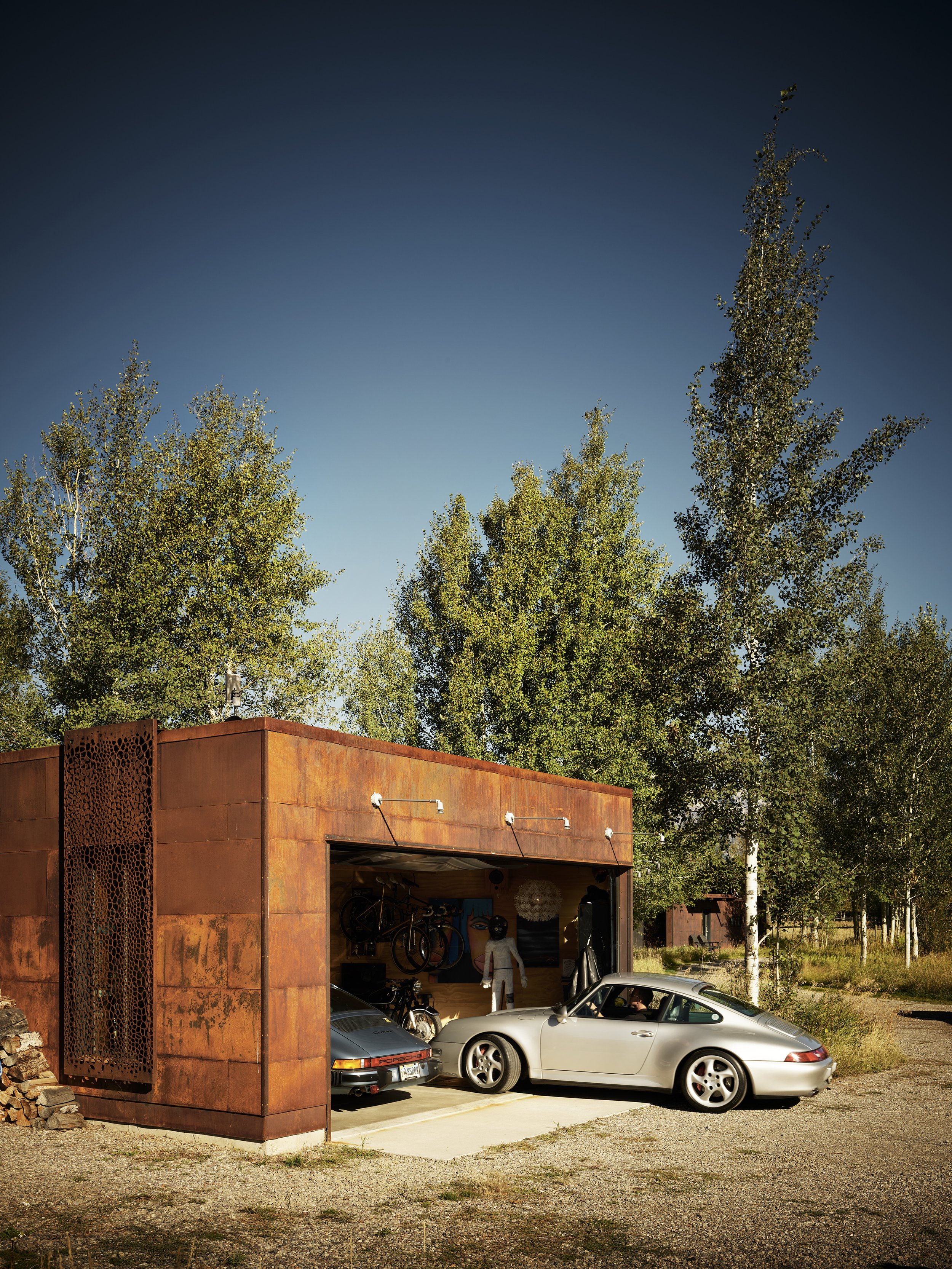
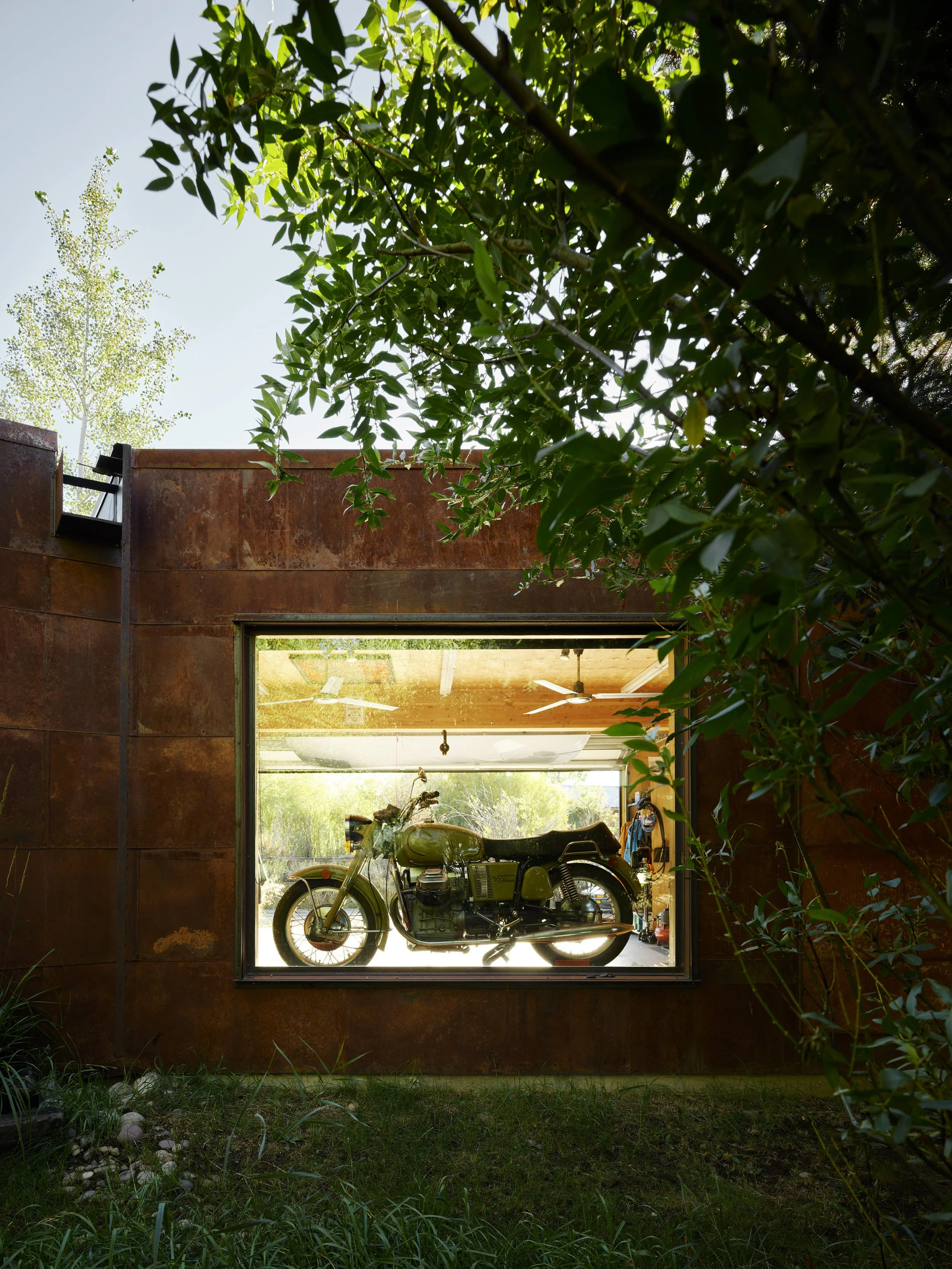
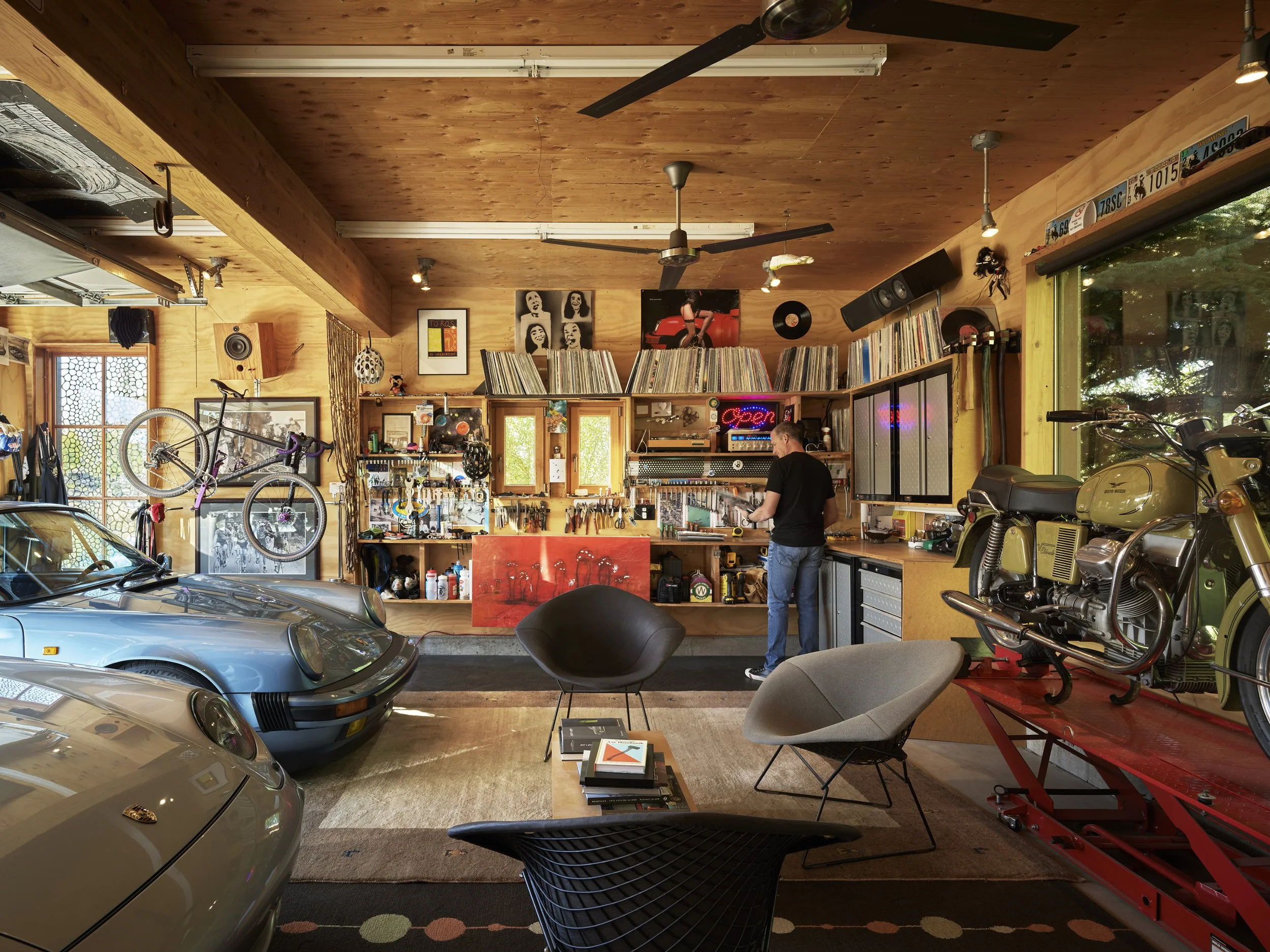
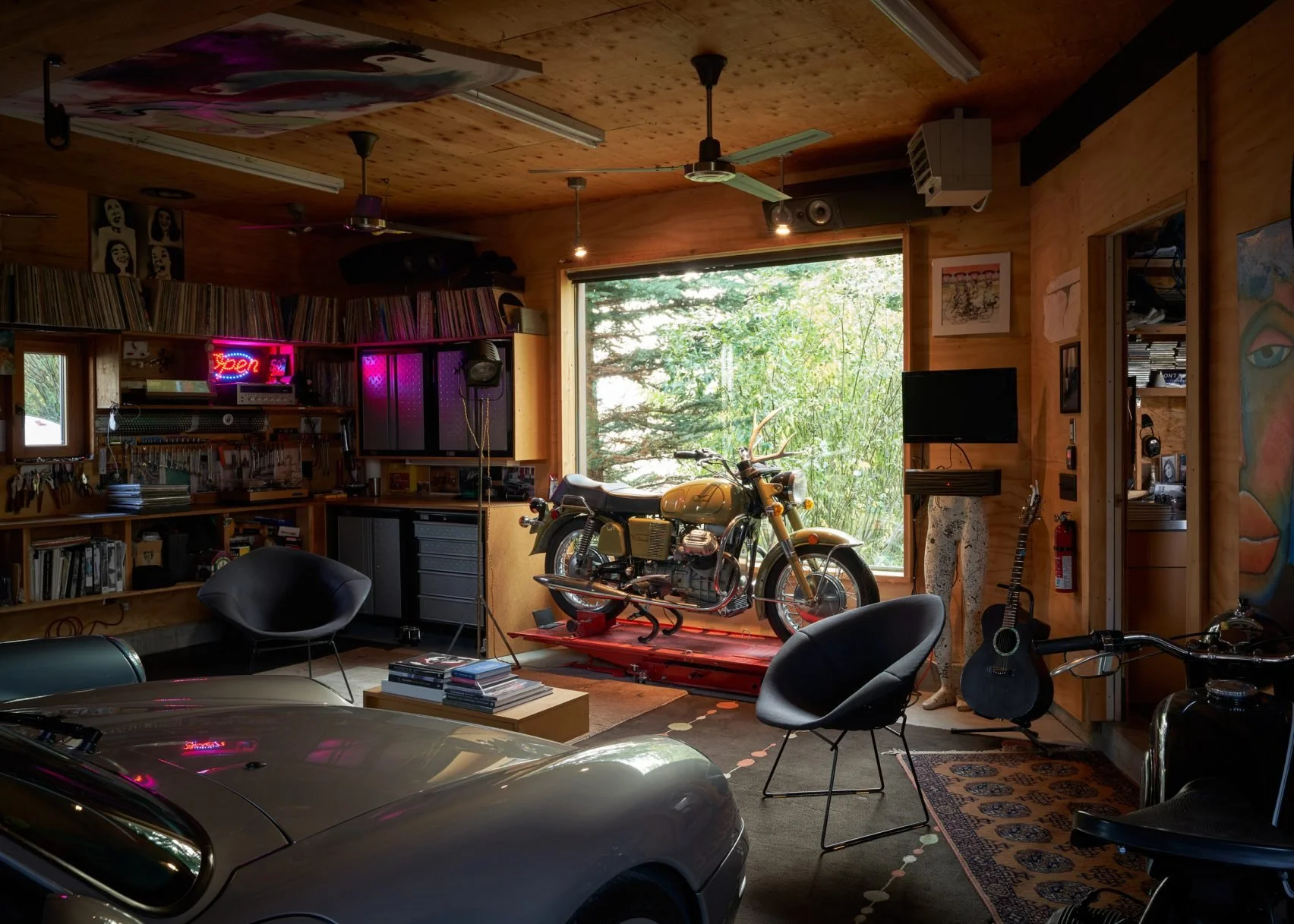
The garage plays a significant role in how the property is used. Added incrementally as the family’s needs expanded, the detached garage and its later addition are constructed from oxidized steel that continues to weather with exposure. The space houses a collection of classic Porsches alongside motorcycles, bicycles, tools, vinyl records, and musical instruments. These elements are not separated by function or concealed from view; instead, they are accommodated directly within the design.
In use, the garage supports a wide range of activities. Workbenches and tool storage sit alongside record shelving, seating areas, guitars, and motorcycles positioned on lifts. The space functions equally as a place to work on vehicles, listen to music, maintain equipment, and spend extended time in the presence of the collection itself. Its forms relate to the main residence without replicating it, reinforcing the garage as a separate but closely connected space within the overall site.
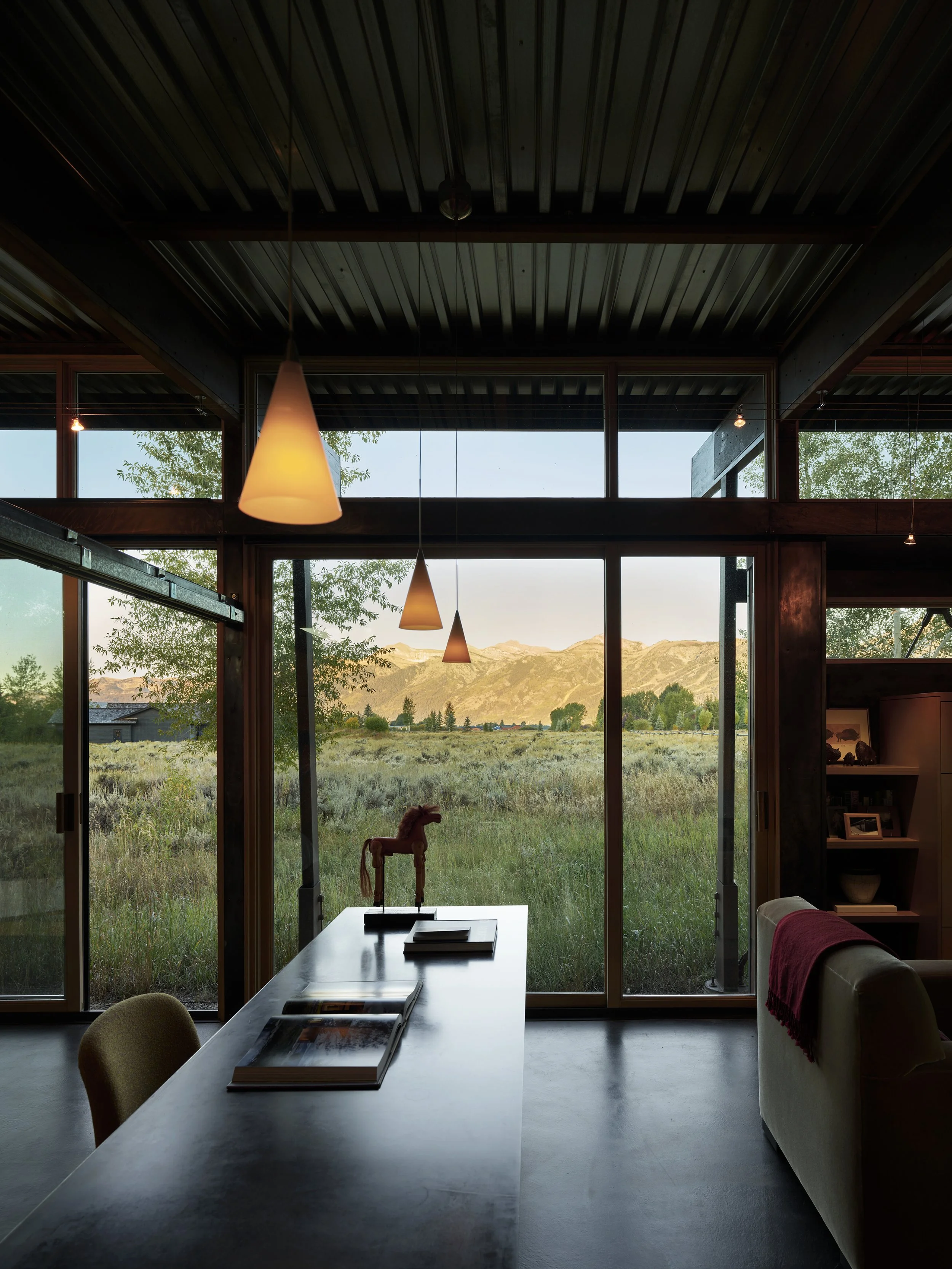
The land and site plays a prominent role. Views toward the Tetons are framed through openings, roof overhangs, and the spacing between buildings. Deep overhangs moderate sun and snow, while generous openings support natural light and cross-ventilation. Over time, the Logans have introduced native plantings and trees, increasing shade and providing habitat for wildlife while softening what was once an exposed plain.
A guest house added in 2001 extends the site’s flexibility, providing space for visitors, a yoga and workout room, and separation from the main residence when needed. Together, the buildings are related through material use, scale, and their response to climate and landscape.
The most recent renovation, completed in 2020, focused on refinement rather than significant alteration. A long-envisioned metal roof replaced the original shingles, exterior finishes were refreshed, and the kitchen was updated with hot-rolled steel countertops and revised millwork. These changes emphasized durability and continued use over time.
Logan refers to this iteration of the home as his “new black sweater.” The description reflects the project’s underlying approach. The architecture is simple, adaptable, and built to be lived in. In the garage, where music plays and tools stay close, that philosophy becomes tangible. This is a place shaped by use, and is better for it.
Logan refers to this iteration of the home as his “new black sweater.” The description reflects the project’s underlying approach. The architecture is simple, adaptable, and built to be lived in. In the garage, where music plays and tools stay close, that philosophy becomes tangible. This is a place shaped by use, and is better for it.