ARCHITECTURE
A-Frame Workshop
Project Details:
Architect: Kilburn Architects
Location: Issaquah, WA | Renovated 2018
Photography: Darren Fleming
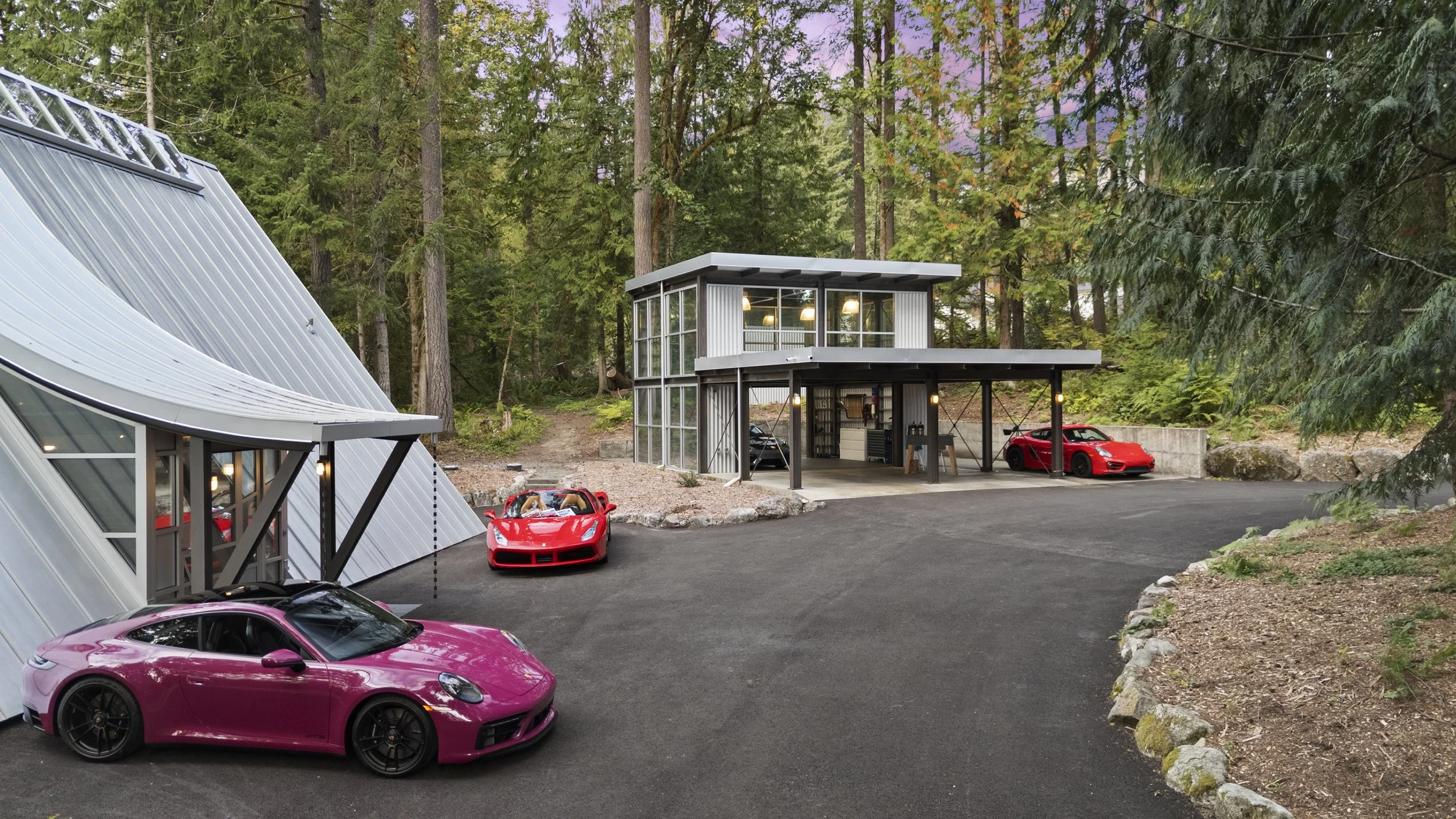
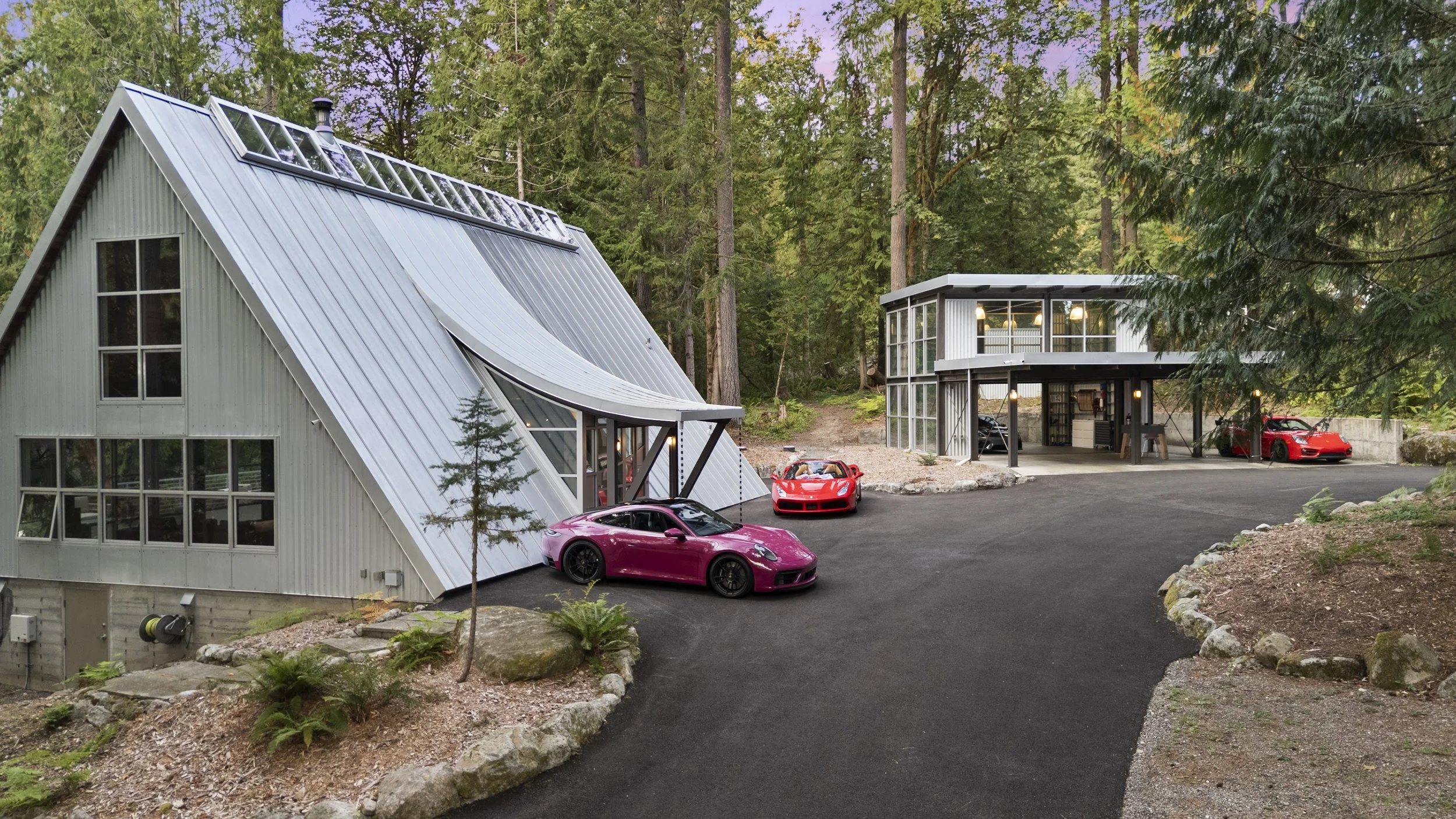
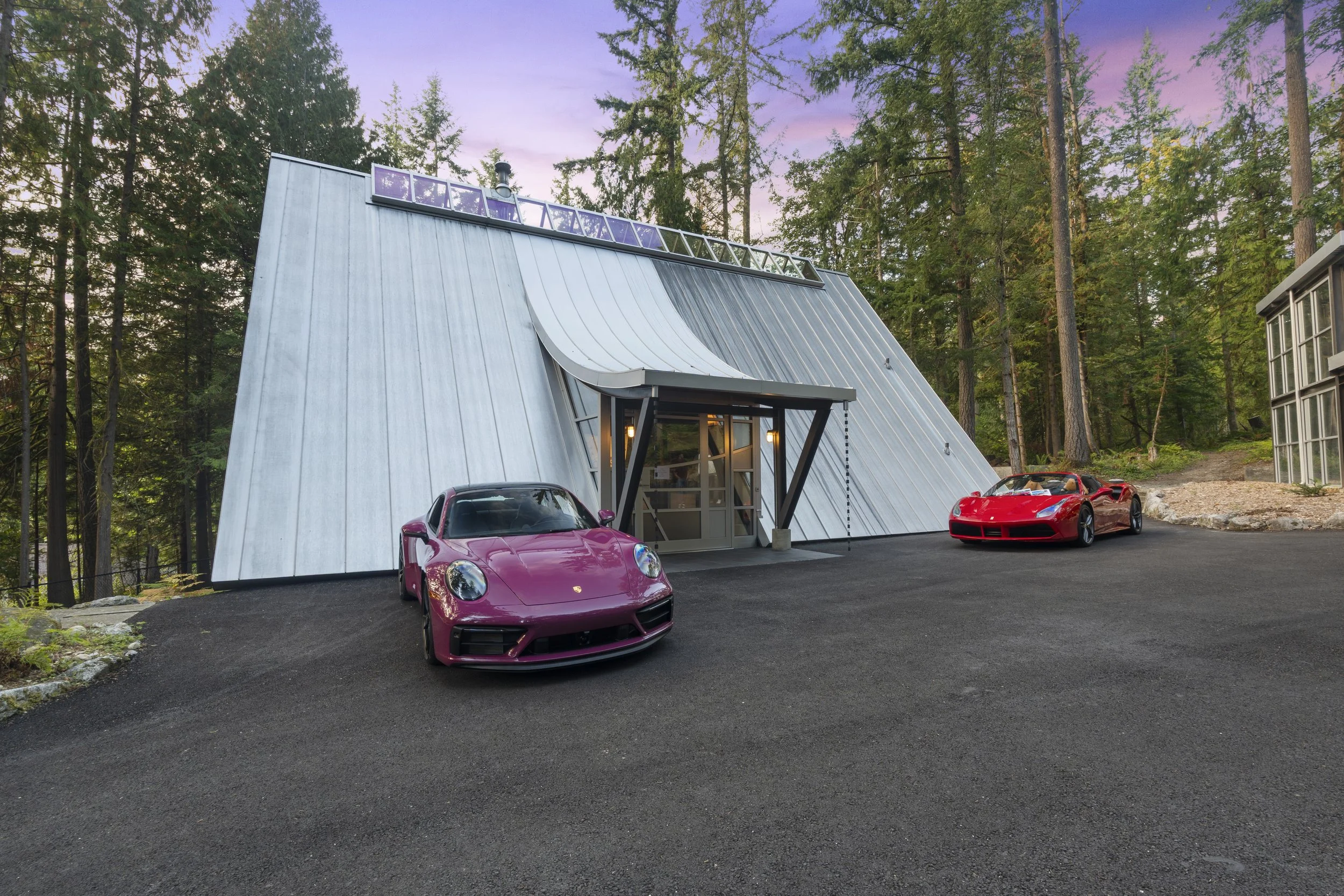
A steel and glass A-frame shaped by light, material, and use - a home and garage conceived with equal intent, where cars, tools, and collected objects coexist.
This home is currently offered for sale by Don Weintraub of Windermere. View the listing here.
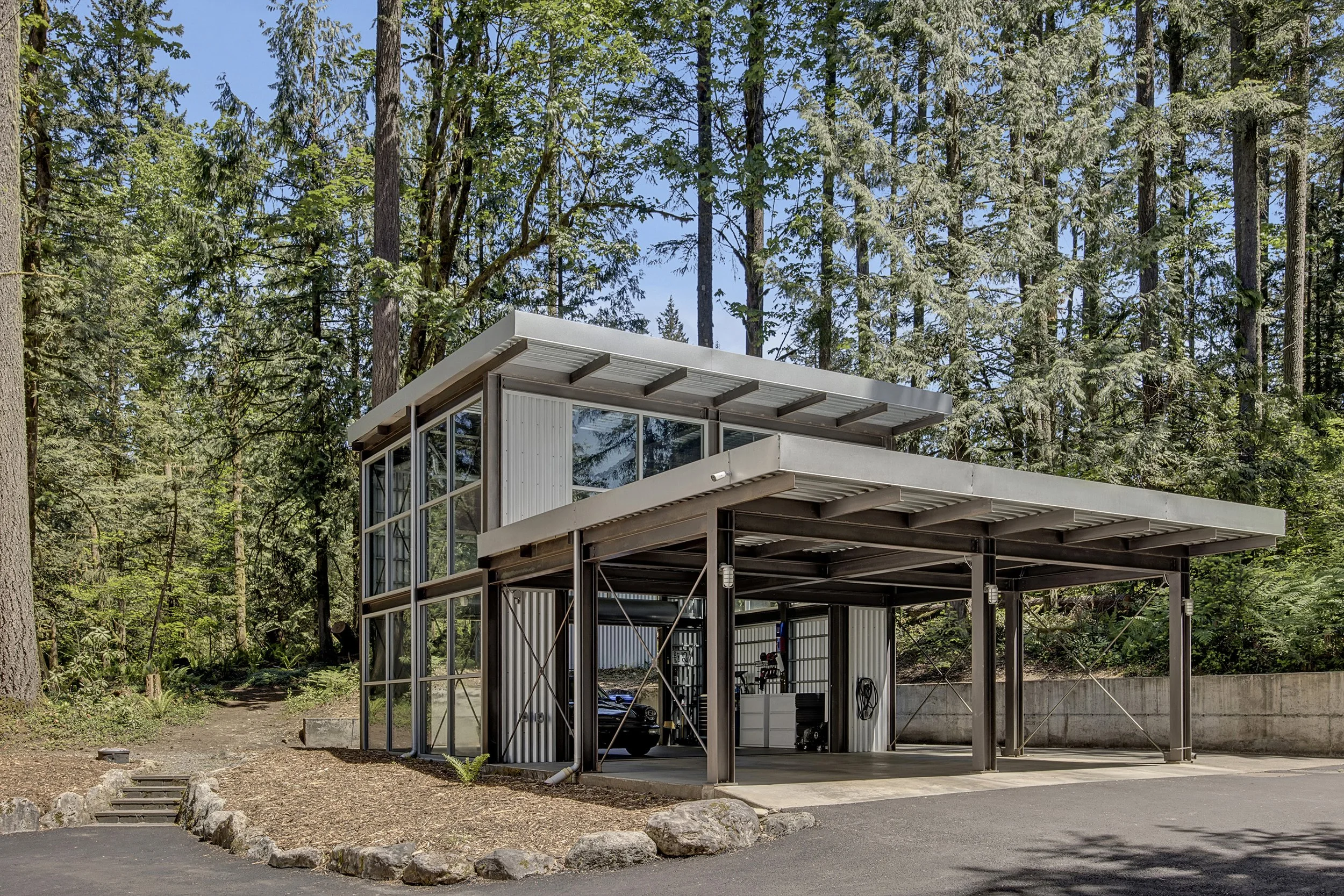
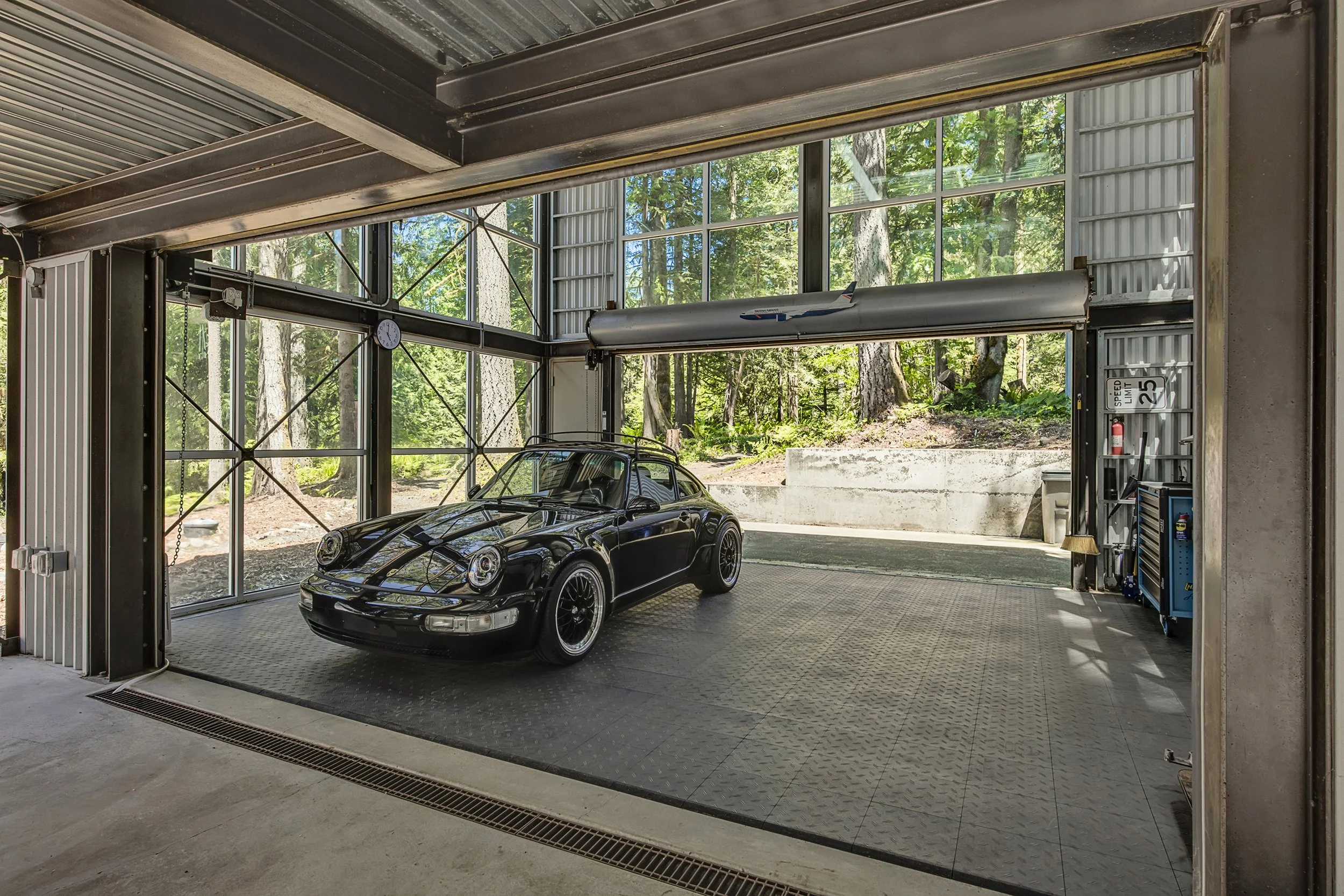
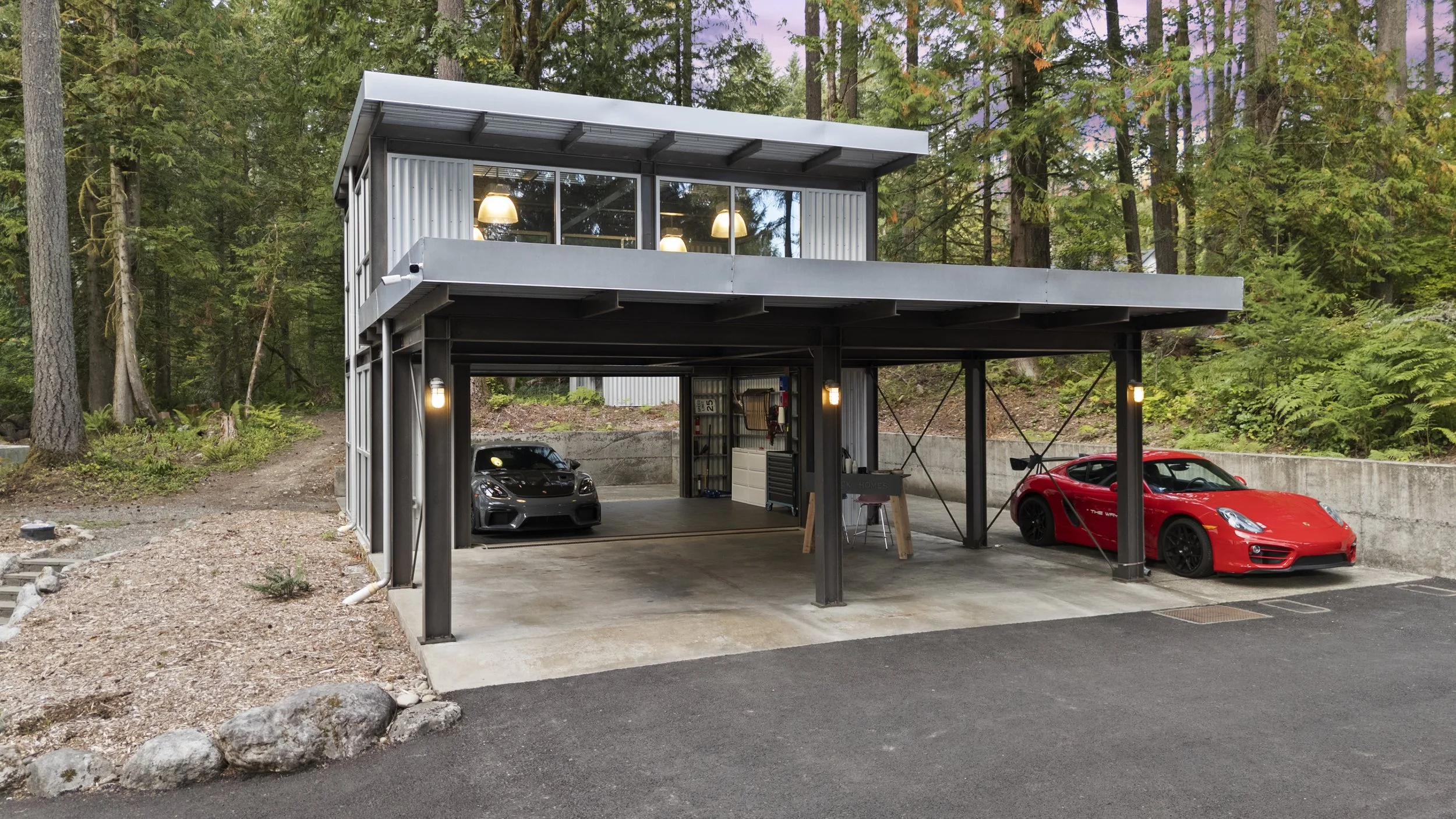
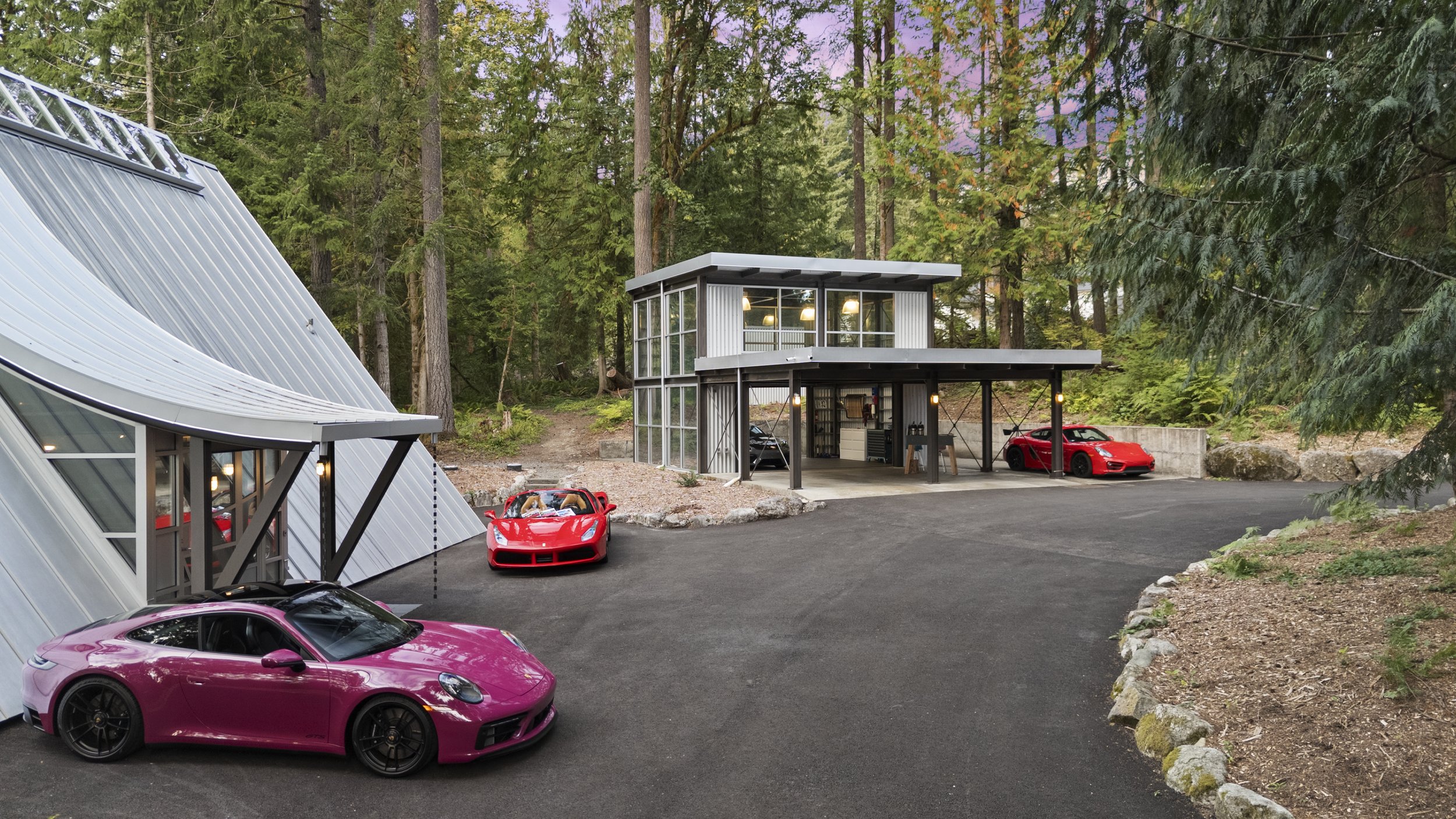
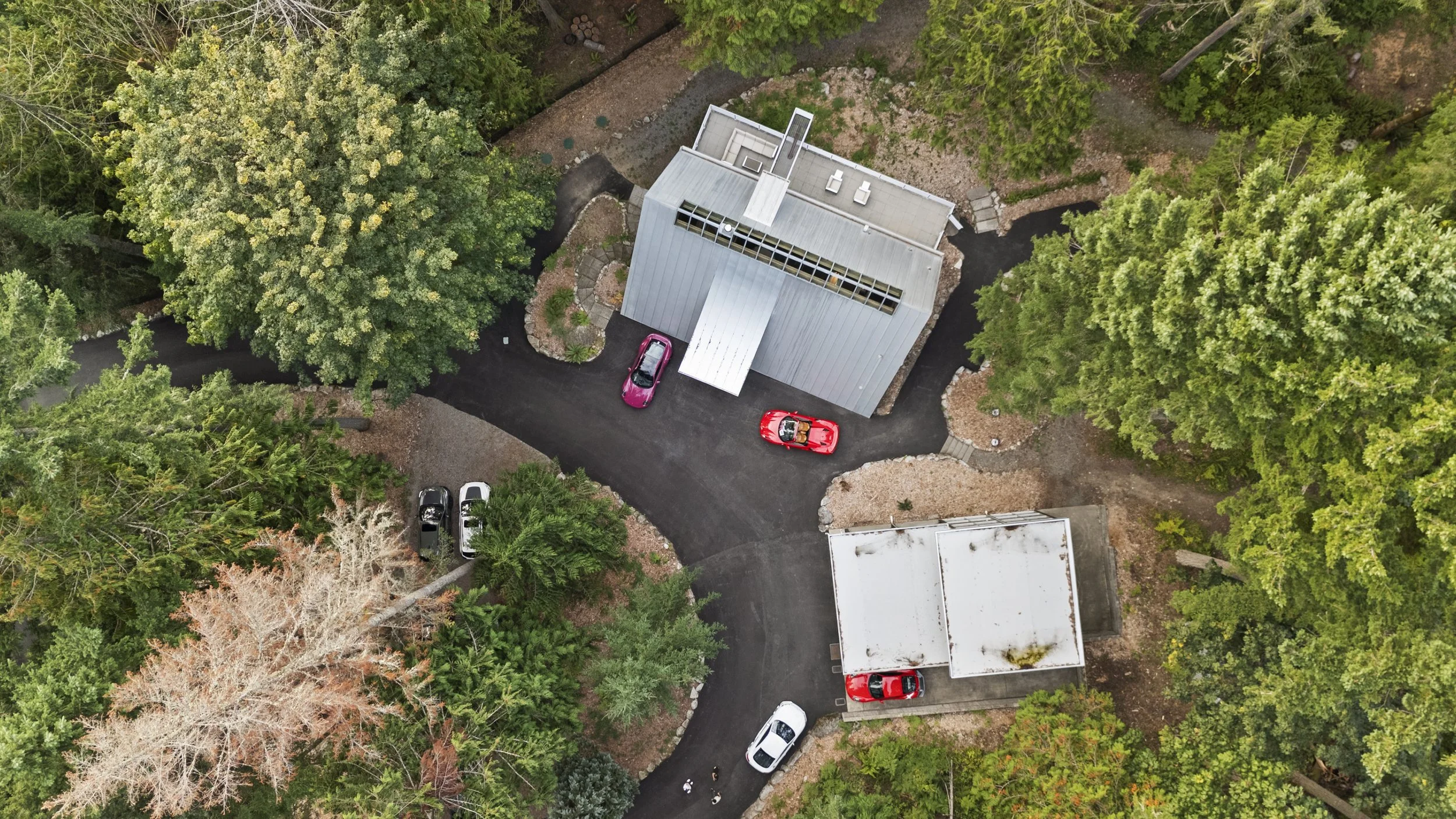
Set back among trees on just over an acre in Washington state, the A-Frame presents itself with a quiet confidence. Wrapped in steel and glass, its sharply pitched roofline cuts a familiar silhouette, but the materials and execution signal something more deliberate. Across from the house sits a metal-and-glass garage, the current owner calls “his toybox,” a counterpoint to the warmth and geometry of the main structure. Together, they form a compact compound shaped by intention rather than excess.
The property dates to 1965, though its history is anything but ordinary. Long before its most recent transformation, a previous owner famously kept an African lion on the grounds, a piece of local lore that feels improbable, yet somehow fitting. The A-Frame has always attracted people drawn to the unconventional.
Today, it belongs to someone cut from a similar cloth.
The owner grew up in Southern California before spending more than two decades in Arizona, where much of his family remains. Cars entered his life early. Very early. At fourteen, he bought his first vehicle from the Penny Saver, a 1976 GMC Jimmy purchased for $600 before he even had a driver’s license. It became his classroom. By sixteen, he had rebuilt it, sold it, and moved on to a succession of Mustangs, Camaros, and whatever else he could find on farms and back roads. Fix, learn, sell. Repeat.
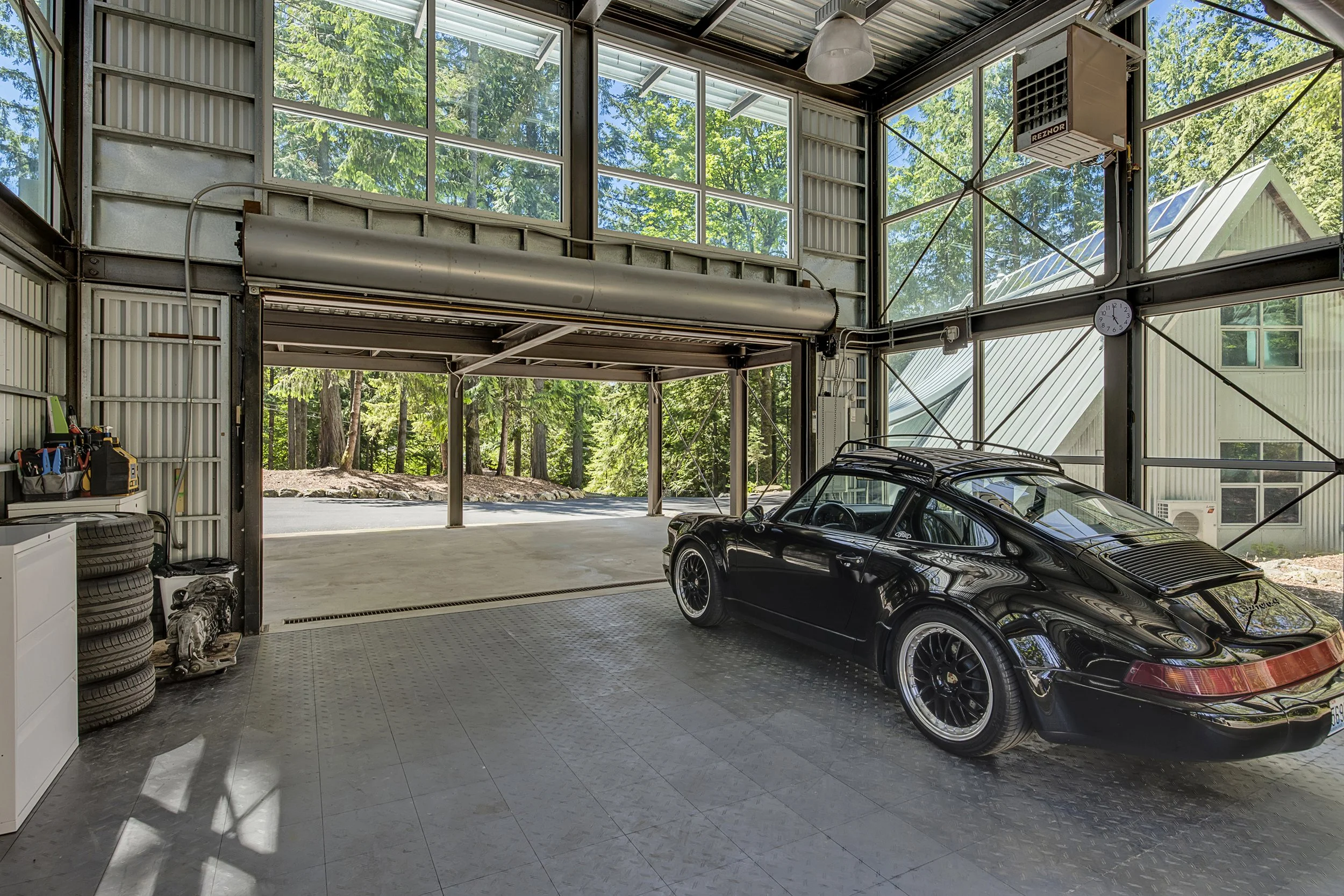
Over the years, that instinct never left. By his own estimate, he’s owned well over a hundred cars, including more than thirty Porsches in the past decade alone. At the center of the current collection sits a 1994 964 factory Turbo, wide-bodied, re-engineered, and deeply personal. Converted from all-wheel drive to rear-wheel drive, fitted with a 3.8-liter engine and six-speed transmission, it’s less a showpiece than a culmination. A dream car, refined through use.
That same mindset of curiosity, refinement, appreciation for engineering history runs throughout the property.
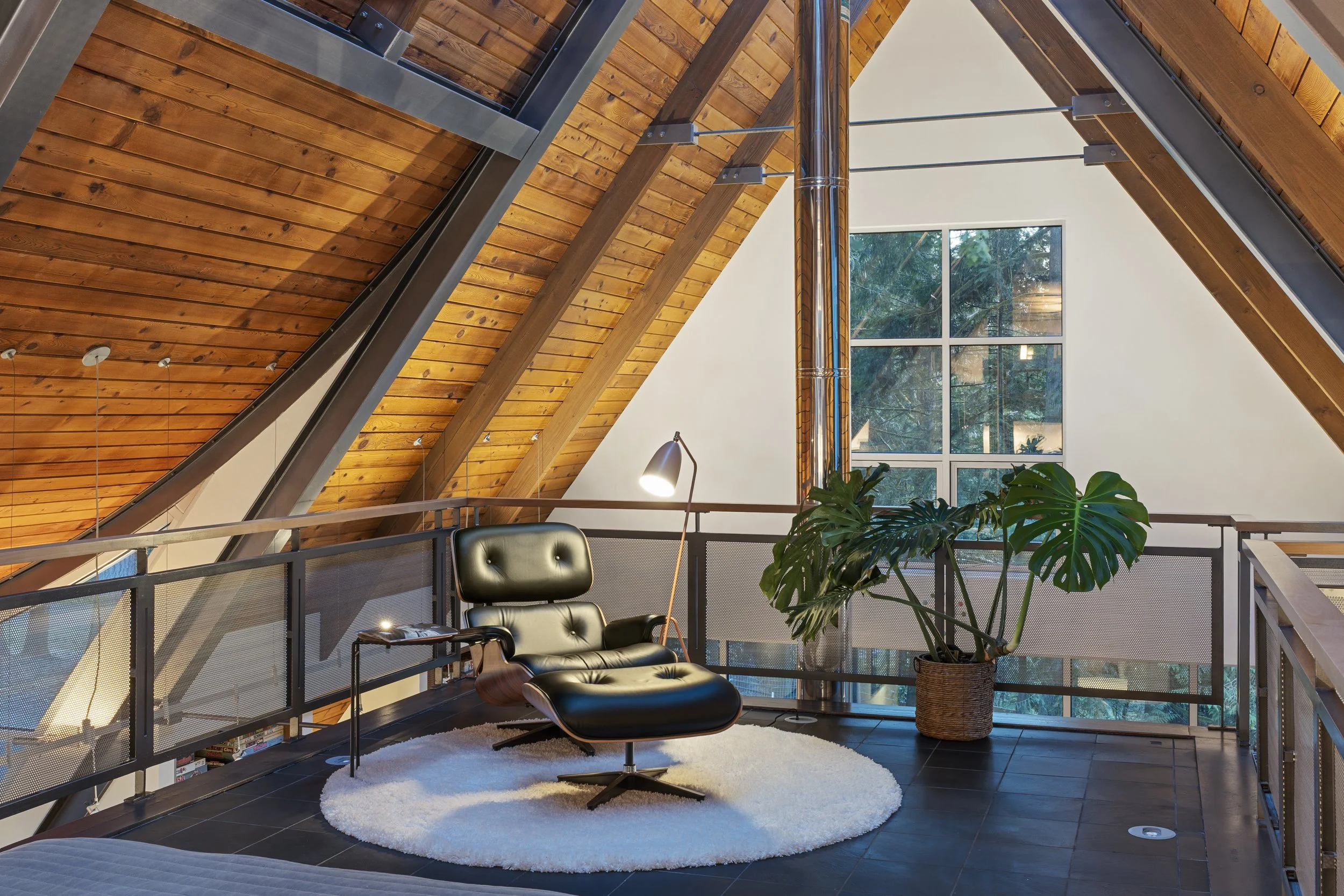
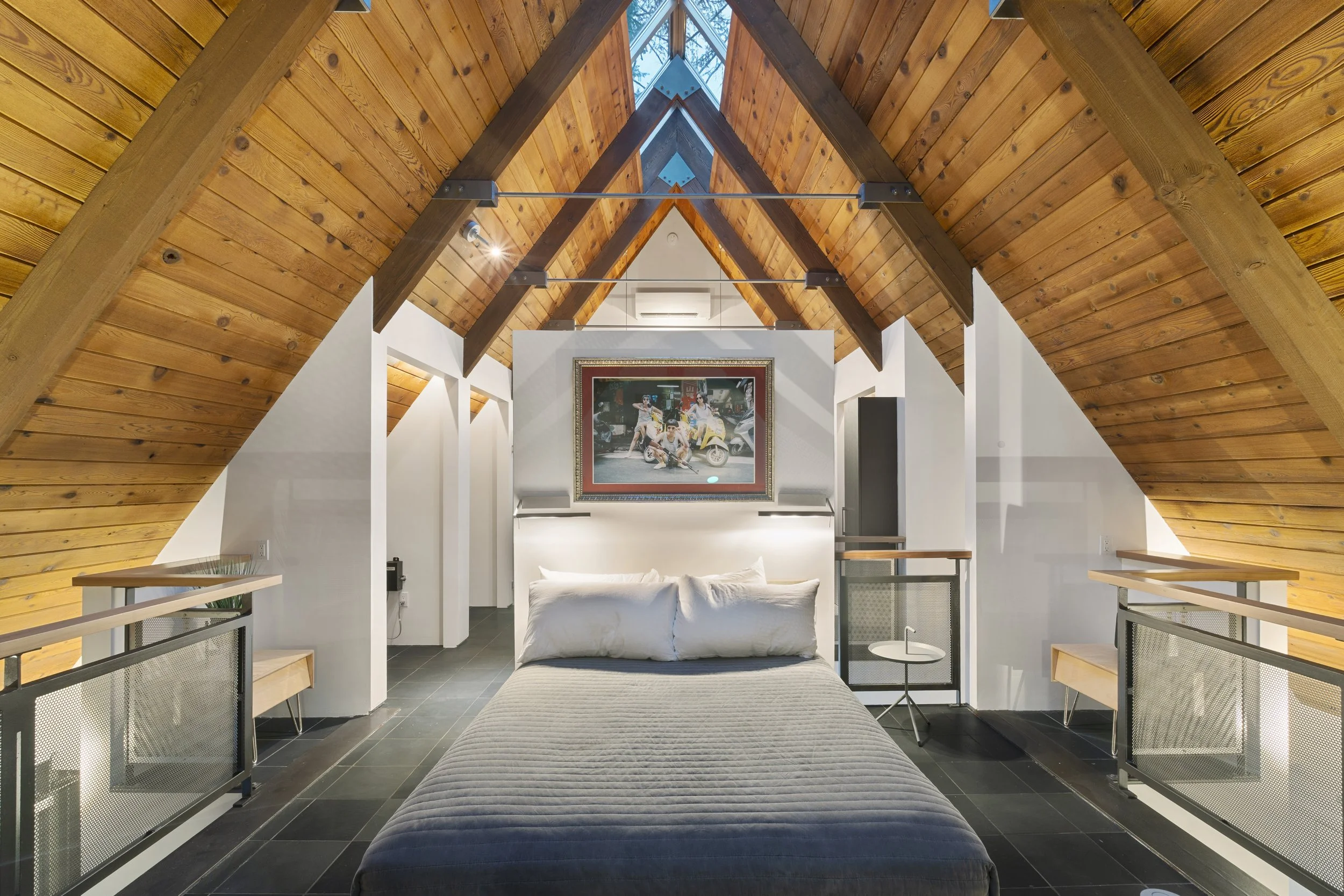
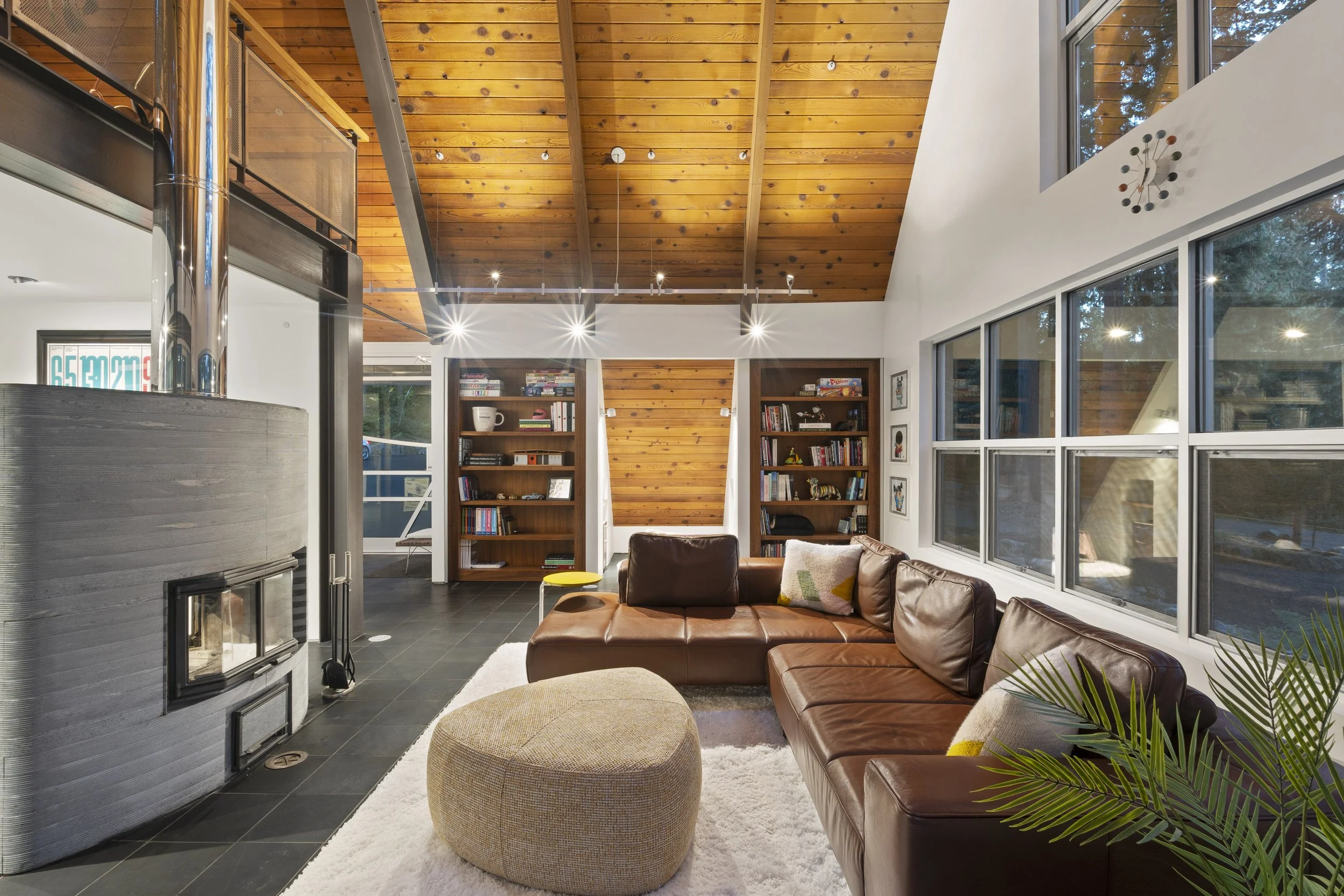
The home underwent a comprehensive architectural overhaul in 2018, embracing its A-frame constraints rather than fighting them. Straight walls are scarce, the design leans into volume and light instead. A glass spine traces the peak of the roof, pulling daylight deep into the interior. Skylights ensure that even on the grayest Pacific Northwest days, the house never feels dim. Walnut cabinetry and warm interior finishes temper the industrial shell, while a soapstone fireplace and Japanese soaking tub ground the space.
For the owner, one of the most striking aspects of the home is how often it reveals itself anew. “Every time I look at it, I notice another detail,” he says. Bolts, joints, steel transitions, nothing feels arbitrary. It’s a space where art and function blur, where materials are left honest and legible. He describes it as a meeting point between mid-century modern sensibility and a kind of restrained brutalism.
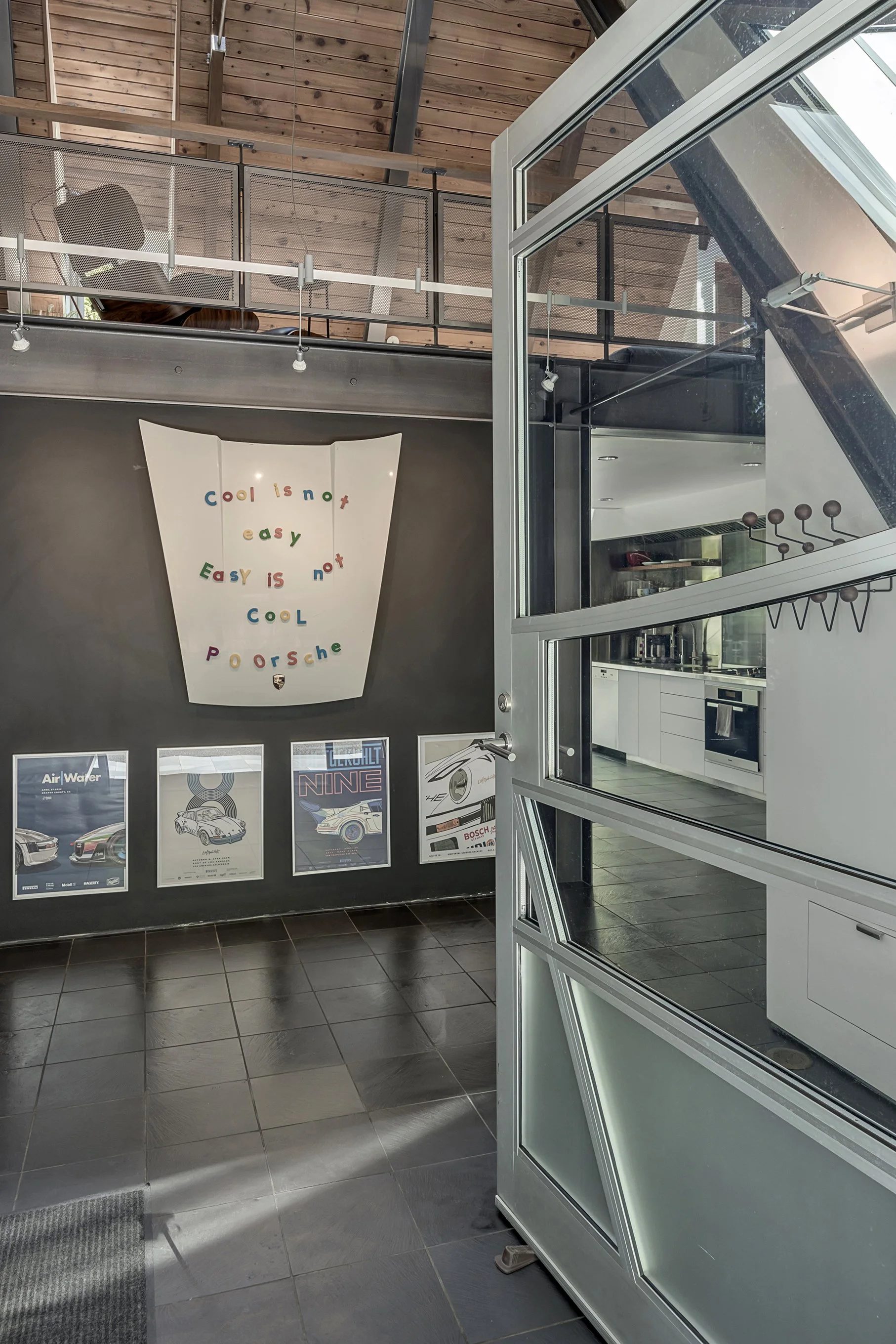
The garage, however, is where that philosophy becomes most tangible.
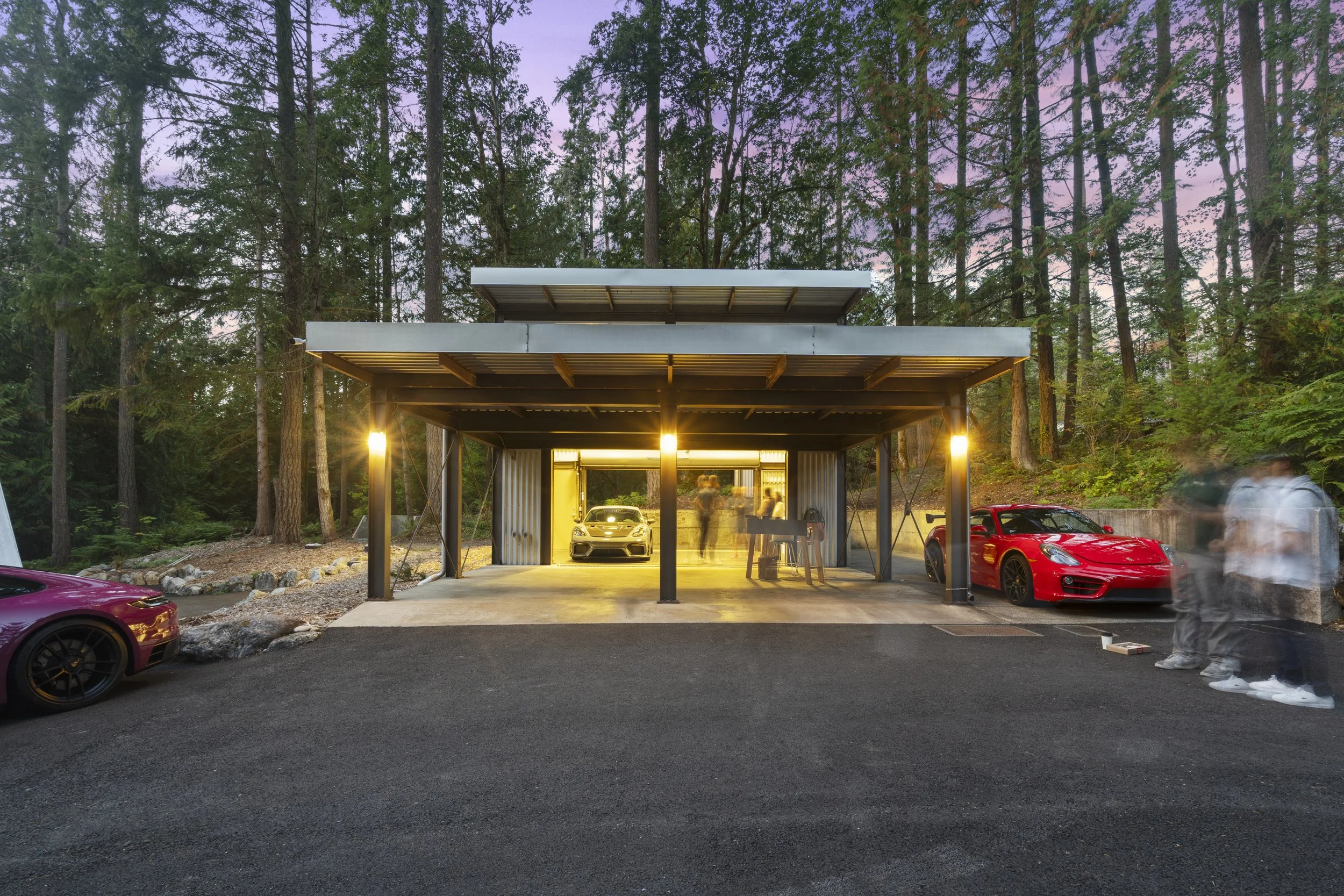
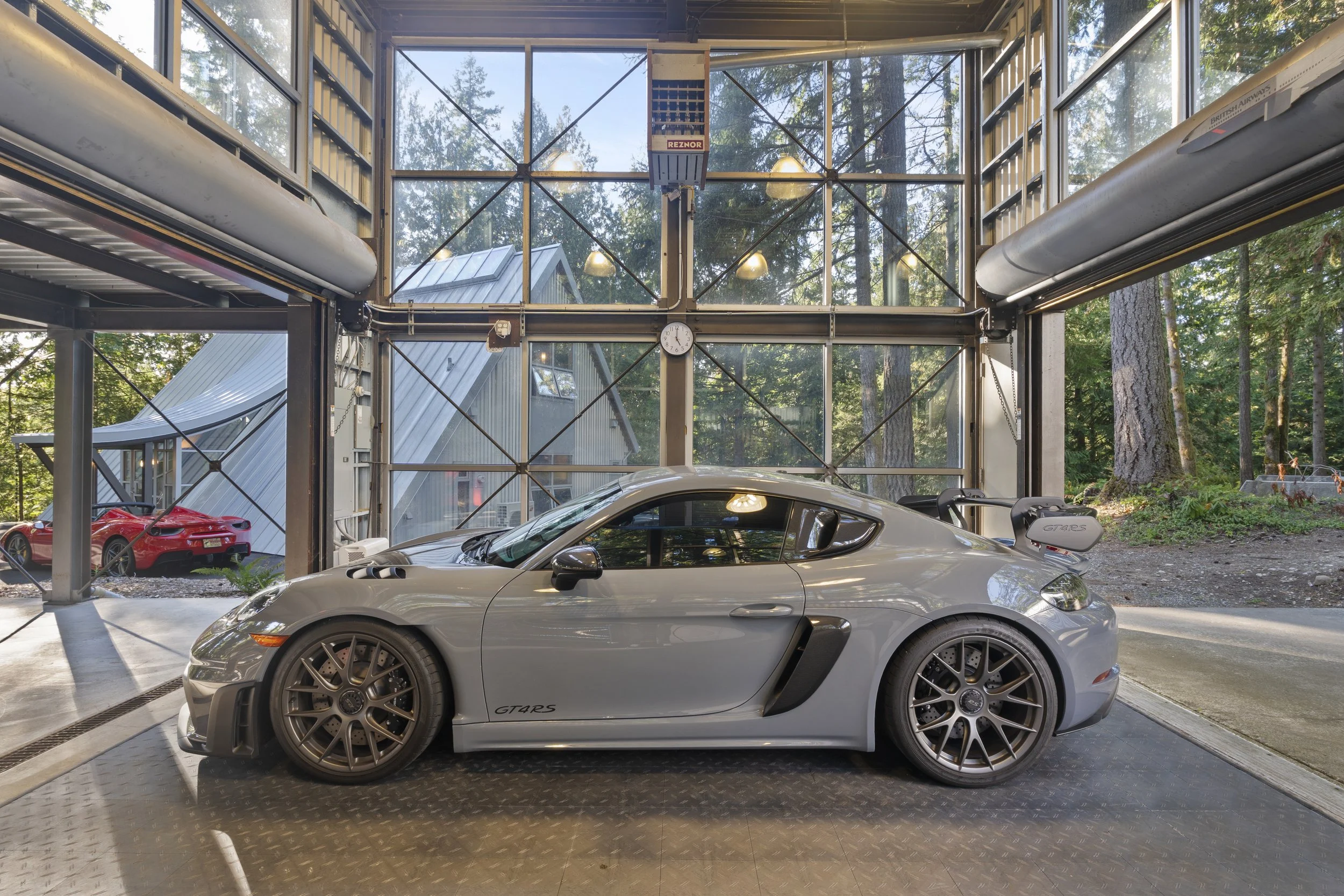
Originally conceived as a glass-blowing studio, the structure was designed with industrial gas lines, substantial heating, and large doors on opposing sides to allow airflow and seasonal expansion. Those bones remain, now repurposed for automotive work and mechanical tinkering. Cars rest alongside tools, artwork, and objects collected for no reason other than they spark curiosity or joy. It’s equal parts workshop and gallery, a place to work, then step back and admire what you’ve made.
The garage is not precious, but it is considered. It’s used as intended: a resting place for machines and a working space for hands-on problem solving. Music plays while projects unfold. Doors open in summer. Light cuts through steel and glass in a way that makes even routine maintenance feel elevated.
What makes the A-Frame compelling isn’t just its suitability for cars, but its versatility. The owner is quick to point out that the space would serve any enthusiast just as well - woodworking, fabrication, or any pursuit where making and reflection coexist. The architecture doesn’t dictate a lifestyle; it supports one.
That adaptability may be the property’s greatest achievement. It is a place shaped by passion, refined through care, and quietly confident in its identity. Like the cars inside it, the A-Frame isn’t about perfection, it’s about intention, history, and the satisfaction that comes from understanding how things are built.
And occasionally, it carries a reminder that even the most thoughtfully designed spaces can have a wild past.